
How did you come to work with etcetera?
Ulrich: Rob and Ariane were always around. I think it started with UNStudio, where they were working at the time. At some point, they decided to start their own business, so I have known them from that period onward, and we have continued to exchange ideas ever since.
I have always been impressed by how they have managed to work with large corporations as a small firm. I never had a formal project with etcetera, but they would often step in when something was interesting for them, and we would exchange ideas. For instance, they are working with Oliver Tessman from TUDarmstadt on a project involving 3D printing, and we invited Rob to give a talk.
I remember one particular situation at a trade show. At the Schüco stand, they had a secret drawer that they opened for me to show me the door handles they were developing with Schüco. They had come up with a design solution that protected your thumb from getting damaged when opening the door inward.
I really liked that moment: discovering the secret drawer, seeing the handle, and then realizing how well the solution had been thought through. The design was beautiful, but technically it was also very smart.
Every designer wants to design their own door handle, but they took it to another level. They found a design solution to a difficult technical problem.
What were you looking for in this partnership?
Ulrich: Nothing specific. I knew they were at the trade show, and we were simply meeting and exchanging ideas, so there was no particular brief or objective.
I see them occasionally. Rob gives talks at BEAM Frankfurt, and it was also there that he came into contact with nagami, the Spanish company they printed the Septa chair with.
What did they bring to the table?
Ulrich: Rob and Ariane see opportunities in technologies. They see the possible products. They have strong technical skills and understand how things work, but at the same time, they have a broader perspective and a very clear aesthetic vision. Those are two things you need as a good project designer. And they are very good communicators.
What do you see going forward?
Ulrich: There is a constant change in trends in our society. After reducing energy consumption, energy harvesting became an important topic. Now we see material scarcity becoming the next major issue.
A lot of design work needs to be done to make products better for recycling and, especially, better for reuse. I see a lot of work for designers in the future when it comes to reuse. We need a different attitude toward design.
If we design a product too well—if it functions too well and lasts too long—the consequence can be that the company that made it goes out of business. That is not etcetera's problem, of course, but the real challenge is to design for reuse in an infinite way.
Good design is at the core of this: timeless design, infinite design, without the consequence of the company going bankrupt. This is a real problem within our capitalist system.
What do you see for etcetera in the future?
Ulrich: Maybe etcetera can find an alternative way of looking at this challenge. Perhaps they could come up with a product that can be dismantled, with parts that can be reused.
Not necessarily an infinitely lasting product, but a product made of parts that can be used again in different products. That might be an aspect of a future design attitude: we should be able to reuse what we design. So I want to close by saying: Please, don't stop designing!
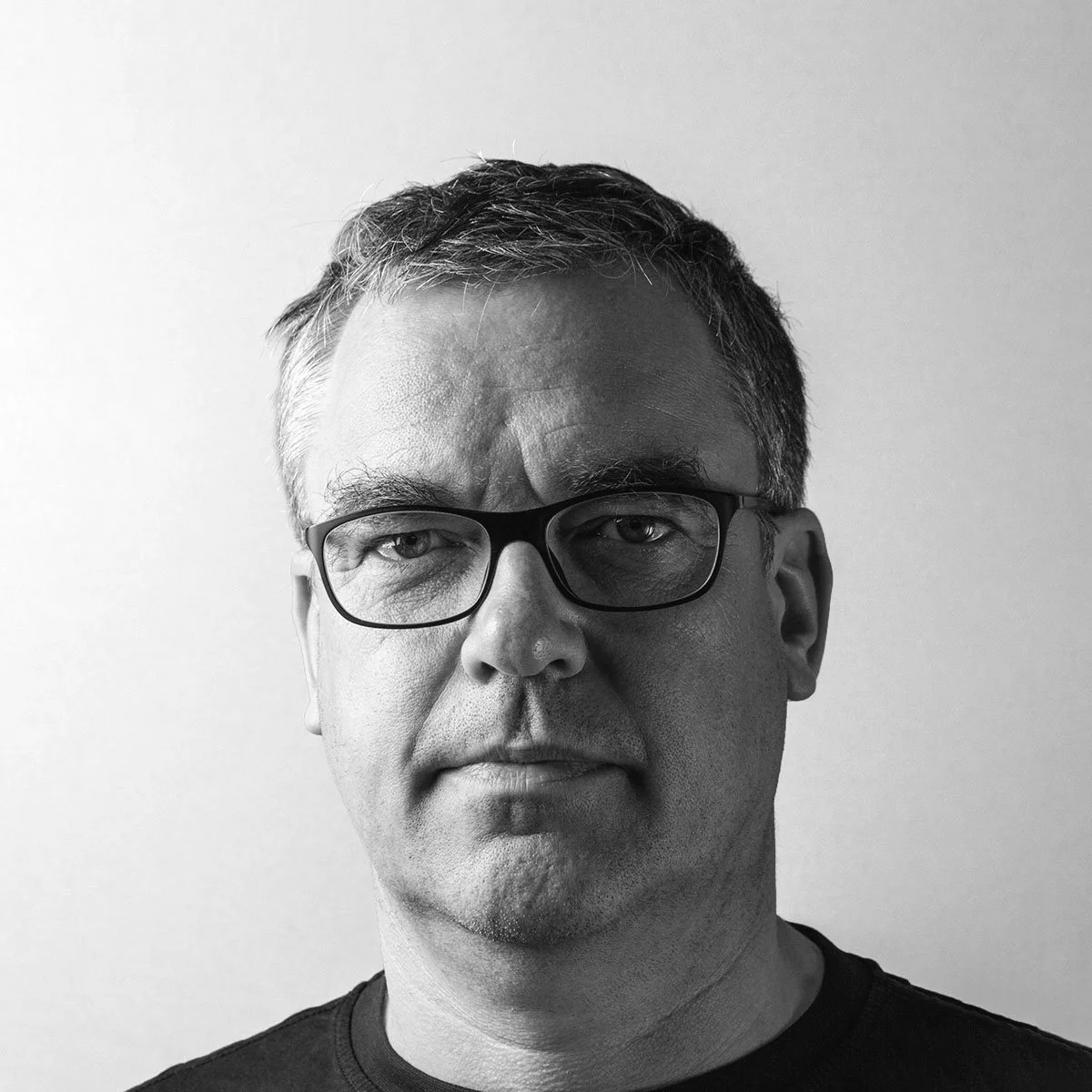
Professor of Facade Technology / Tu Darmstadt
Professor of Building Technology / TU Delft
photo: Marcel Bilow
Dr. Ing. Ulrich Knaak